IN THIS EDITIONEconomics · CPU mining Testing · Launch preparations
NRB · version 0.1.0-devProject specifications · October 13, 2026An independent chain based on VerusCoin
Front pagePreparing for launch
Typesetting this edition…
Lead story / The NRB coin
Its own chain. Zero premine.
Nerbus is an independent chain based on VerusCoin. CPU mining, hybrid PoW/PoS consensus and coin issuance rules set in advance.
NRB runs on its own blockchain. New coins follow a block reward schedule. Both the premine and the genesis block reward are zero.
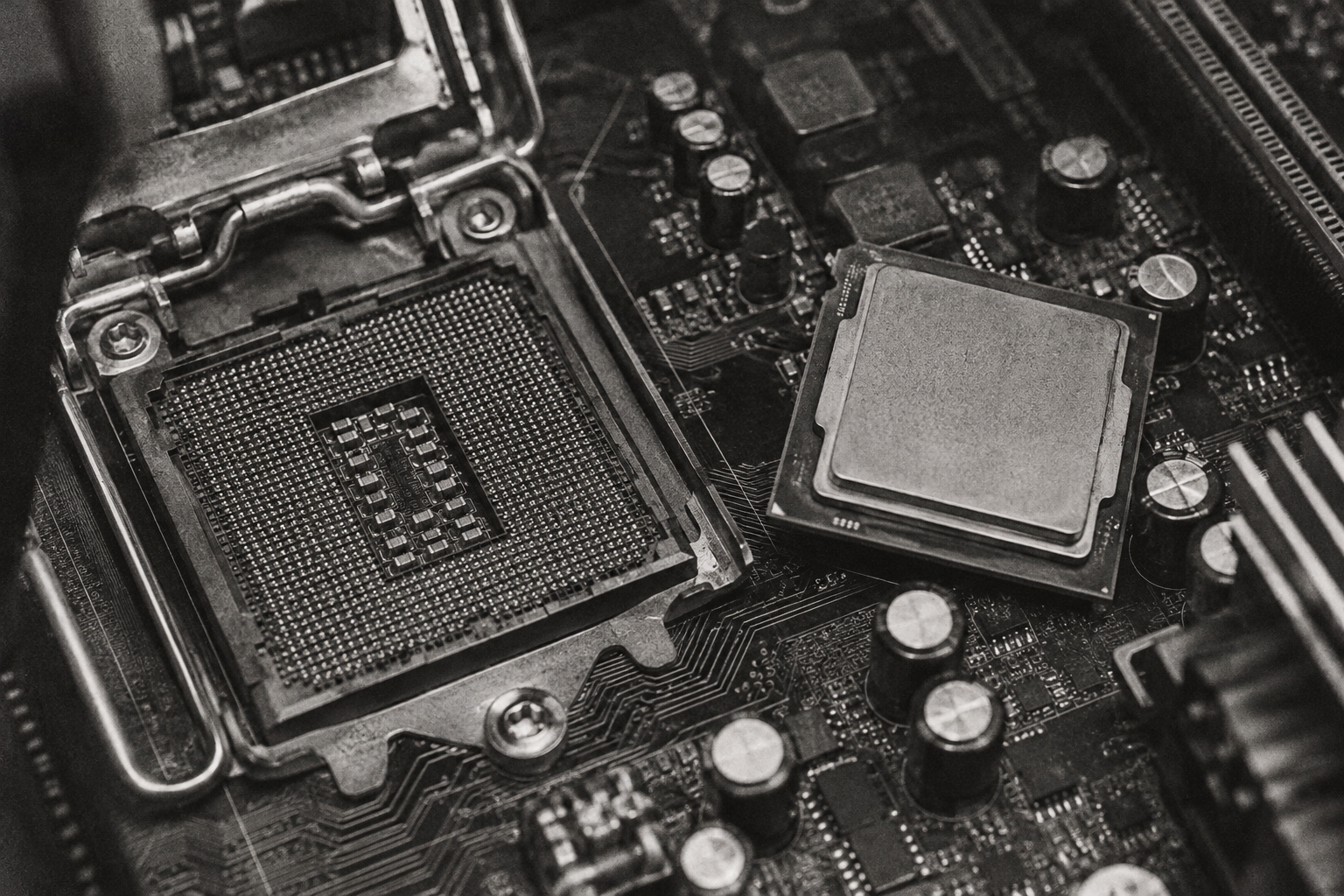
The CPU is the working tool of Nerbus PoW mining. Photo illustration.
At a glance / The essentials
The coin explained in four numbers
209mNRB
The maximum total permitted rewards over the entire life of the chain. Issuance is limited by the coin rules.
30seconds
The target block interval sets the pace of the network. Actual intervals may vary.
0premine
No supply is created in advance through a premine. The genesis block also pays no reward.
50/50PoW / PoS
The target balance between the two hybrid consensus mechanisms inherited from Verus.
The native coin of its own network
NRB is issued by its own chain. Block height, rewards and halvings determine its supply schedule. One NRB contains 100,000,000 base units, giving transactions eight decimal places of precision.
The project is based on VerusCoin v1.2.18. Nerbus defines its own network and issuance parameters.
Editorial / The starting point
The work so far. The steps ahead.
Nodes create blocks, synchronize a shared chain history and process coin transfers. The Linux build has also been checked for state persistence after a restart.
Launch preparations are underway
As of the October 13 project report, mainnet has not launched. Public source code, Windows/Linux builds and live pool mining tests are in preparation.
Economics / The issuance schedule
209 million. Not a coin more.
The NRB issuance limit is built from block rewards. Rewards fall over time, and the number of reward periods is set in advance.
The first period begins at 100 NRB per block. Every 1,045,000 blocks, the base reward halves: first to 50, then 25, 12.5 and so on. There are 34 reward periods in total.
The schedule follows chain height. The first halving occurs at block 1,045,001. Its calendar date depends on how quickly the network produces blocks.
How the maximum total rewards accumulate
1 period
50%
2 periods
75%
3 periods
87.5%
4 periods
93.75%
Share of 209 million NRB by the end of each of the first four periods.
The first period permits 104.5 million NRB in rewards. The second adds 52.25 million. Each successive period introduces fewer new coins.
The ledger / Rewards by block height
From 100 NRB to the smallest unit
Starting block and base reward for each period
Period
First block
NRB
1
1
100
2
1,045,001
50
3
2,090,001
25
4
3,135,001
12.5
5
4,180,001
6.25
6
5,225,001
3.125
7
6,270,001
1.5625
8
7,315,001
0.78125
…
…
…
34
34,485,001
0.00000001
Why the final adjustment matters
Balances are counted in whole base units. Very small rewards must be rounded when halved. The final block receives an adjustment so that total permitted rewards reach exactly 209,000,000 NRB.
At block 35,530,000 the final reward is 0.11495001 NRB. After this block, new coin issuance through the subsidy ends.
Precision is 0.00000001 NRB. The last table row shows the base reward; the final adjustment is accounted for separately.
Analysis / What the rules mean
Issuance, circulation and zero premine
No coins created in advance
NRB has zero premine and a zero genesis reward. Neither mechanism creates an initial supply. Rewards begin with the first block after genesis.
The limit and circulating supply differ
209 million is the maximum total permitted rewards. Actual circulating supply can be lower if rewards go unclaimed or coins are burned. Determining circulation requires the history of the chain itself.
After the final subsidy
After block 35,530,000, the new subsidy is zero. Fees consist of existing coins: they move between participants and do not increase the issuance limit.
At the target block interval120 blocks per hour 2,880 blocks per day
One reward period takes about 363 days at a 30-second block interval. This is a calculation, rather than a fixed calendar schedule.
Halvings are therefore tracked by block height. Calendar estimates depend on the actual progress of the chain.
Technology / Putting the CPU to work
The CPU joins the Nerbus network
Regular NRB PoW blocks use the VerusHash family, which is suitable for mining on a central processing unit.
A miner performs computational work to propose a new block. Other nodes check it against the chain rules. Finding a block is only part of the process: the network must also accept it as valid.
What shapes the result
The algorithm defines the computation. Actual mining depends on hardware, software, network parameters and the connection method. Owning a CPU does not guarantee a fixed number of coins per day.
Nerbus tests have already produced real PoW blocks. The next practical step is pool mining, from connecting a miner to accepting a discovered block.
The pool is in preparation
Live pool mining tests are still ahead. Public source code and release archives are also being prepared.
Why pool testing is a separate step
Nodes and pools serve different parts of the process. A node enforces the chain rules; a pool coordinates connected miners. The complete setup needs to be tested together.
Network design / Two mechanisms
PoW + PoS. One history of blocks.
Nerbus inherits Verus hybrid consensus with a target 50/50 balance. Proof of Work and Proof of Stake both contribute to the chain.
Proof of Work: computational effort
In PoW, participants use computation to create a block. Regular Nerbus blocks use CPU-suitable VerusHash. A proposed block must pass node validation.
Proof of Stake: participation through coins
PoS adds a way for coin holders to participate in building the chain. Its rules are inherited from the Verus implementation, with a target share of one half of the hybrid.
The 50/50 ratio describes the target balance of mechanisms. It does not require blocks to alternate strictly, nor does it determine any individual participant reward.
What does a 30-second block mean?
It is the target interval between blocks, rather than a guaranteed time for every transfer. Confirmations are counted in new blocks; the actual time depends on network operation.
Field report / Chain operation
The chain passes its first tests
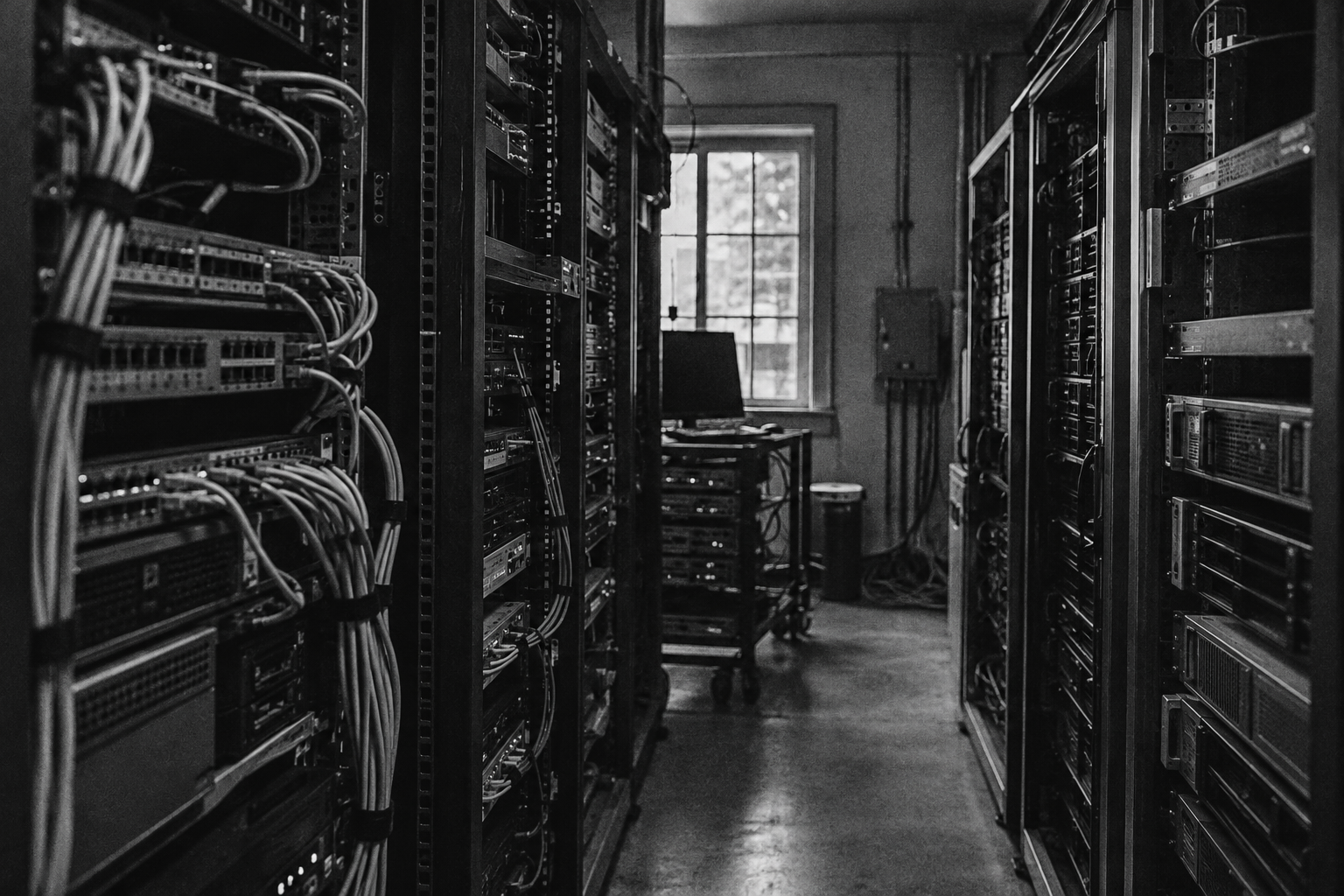
Network nodes propagate blocks and maintain a shared chain history. Photo illustration.
Checks in an isolated network covered block creation, coin operations, invalid data handling and restart behavior.
Key scenarios tested
Scenario
What was checked
PoW blocks
Block creation and reward maturity
Synchronization
A shared chain history across connected nodes
Transfer
Coin transfers and message signing
Invalid block
Rejection of invalid data
Restart
Chain verification and state persistence
The explorer was also tested in the isolated environment. Mainnet was not launched after these tests.
Functional checks cover the listed scenarios. A full audit of consensus, PoS and shielded transfers remains a separate task.
Progress / The road to launch
Test first. Then launch.
Nerbus already has coin parameters, server builds and test results. The next stage takes the project from private preparation toward public participation.
Completed
A working Linux build
The Linux version has been built and tested. Checks covered block creation, transfers, synchronization and persistence after restarts.
In preparation
Source code and builds
Publication of source code and verified Windows/Linux archives. The project is currently a private fork.
Next test
Mining through a pool
Live testing of miner connections and block submission through a pool.
A separate milestone
Mainnet launch
Starting the main network after preparations.
Status is based on the October 13, 2026 project report. These milestones describe the work underway.
THE INDEPENDENT CHAIN JOURNALSPECIAL BULLETIN · NO. 001
AN INDEPENDENT CHAIN A BIG STORYNERBUSSTRAIGHT TO THE STORY ALL ABOUT NRB
EXTRA! EXTRA!
THE RULES ARE SET BEFORE THE FIRST BLOCK
209 MILLION NRB.ZERO PREMINE.
Why is the CPU back in the story? How do block rewards shrink? Where does 209,000,000 come from? Inside the Nerbus chain.
CPU MININGBLOCK TARGET · 30 SECONDSPoW + PoS
THE CPU TAKES CENTER STAGE. Photo illustration.EXTRA!SPECIAL EDITION